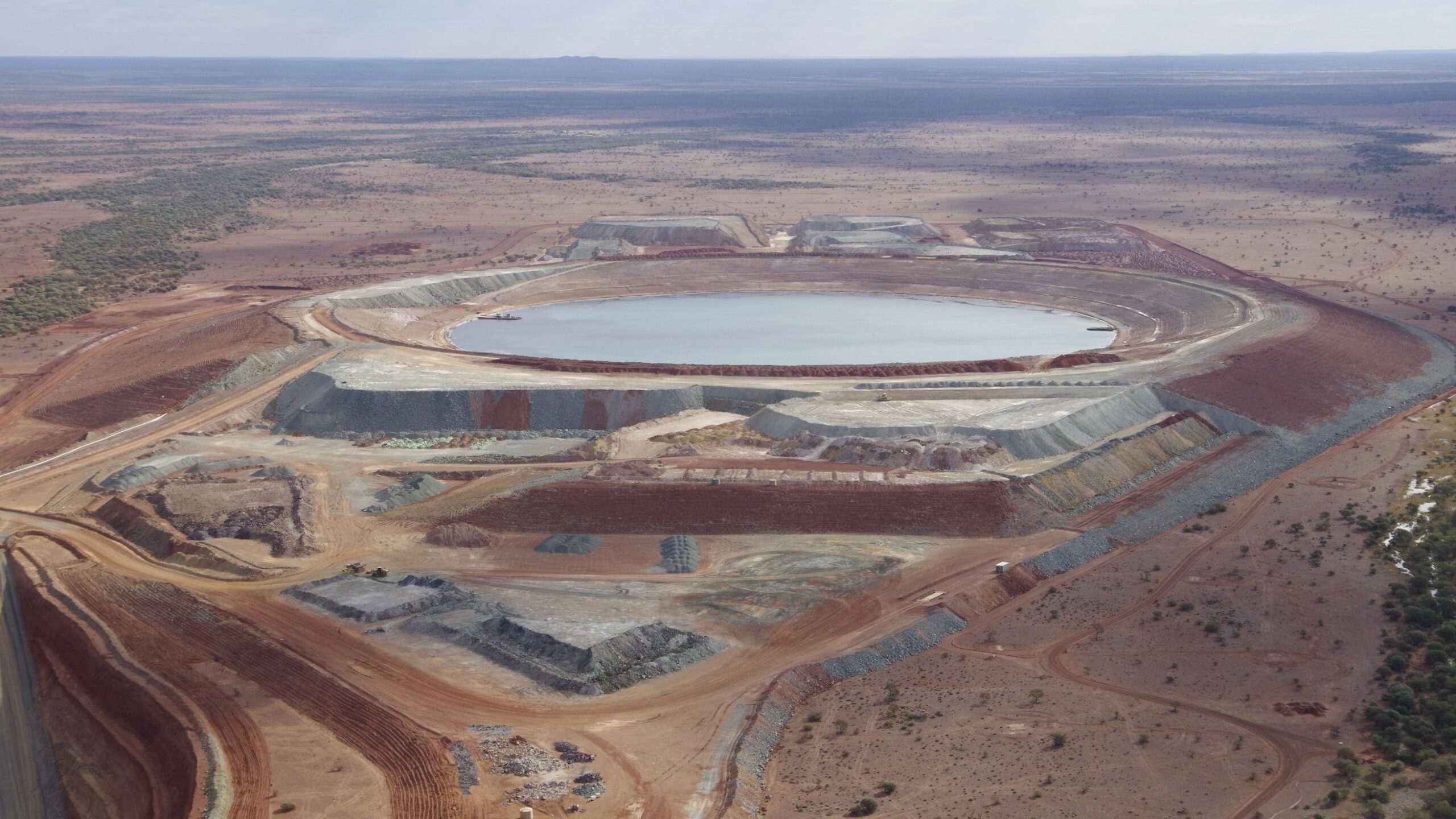
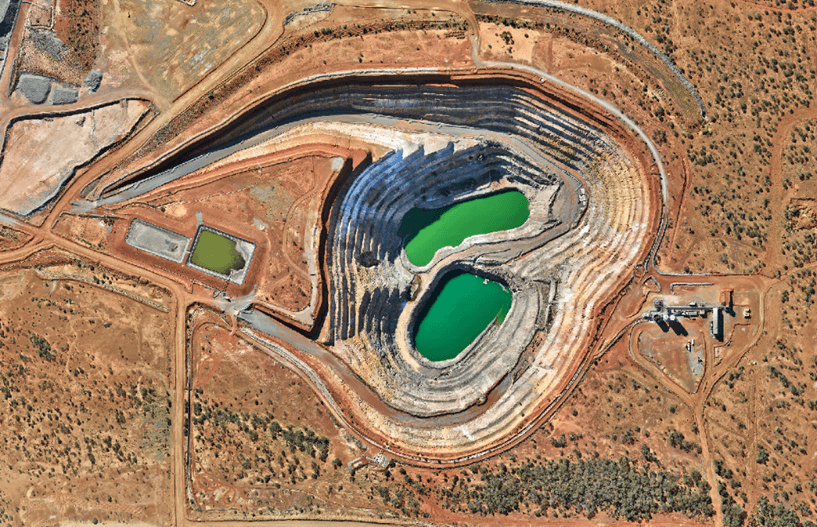
The Sandfire Resources Limited (Sandfire) DeGrussa Copper Mine (DeGrussa) is located approximately 900 km north of Perth and 150 km north of Meekatharra in the Gascoyne Region of Western Australia.The DeGrussa project is set to become Western Australia’s biggest copper mine. MBS assisted Sandfire in obtaining environmental approvals to allow fast tracking from exploration to operations for the project.
Pit Lake Geochemical Modelling
As part of closure and relinquishment considerations for DeGrussa, Sandfire commissioned MBS Environmental (MBS) to undertake a solute balance and geochemical modelling of the pit lake water quality during post closure development and long term. This was to inform the Mine Closure Plan (MCP) submitted the Department of Mines Industry Regulation and Safety (DMIRS). Several versions of the model were generated during mining to investigate different management and closure scenarios including prediction of pit lake water quality after:
-
- Cessation of mine dewatering (2020).
- Cessation of mine dewatering including in-pit potentially acid forming waste rock pit
backfill (2021). - Cessation of mine dewatering including underground mine and in-pit discharge of gold
tailings slurry and reuse of supernatant for processing (2021). - Cessation of mine dewatering including underground mine and in-pit discharge of
copper tailings slurry from processing of stockpiled oxide ore material (2022). - For final closure design (2024).
The areas MBS assisted in were:
- Identification of contaminants of potential concern and key project risks in regard to acid or neutral metalliferous drainage (AMD/NMD) for the project.
- Assessment of suitability of existing data for subsequent modelling and identification of significant knowledge gaps and implications.
- Review of the pre-existing hydrochemical source terms and incorporation of new terms to revise solute balance and geochemical models.
- Undertake predictive geochemical modelling for the pit lake water integrating water balance and solute mass balance models.
- Revise existing risk assessments, based on the outcomes of the refined modelling approach that incorporates:
- Description of arsenic and selenium ecotoxicity and biogenic cycling as key species of interest
- Identification of potentially sensitive receptors that may be affected by the quality of the pit water at various stages of filling (e.g., bats and avifauna).
- Tier 1 assessment of toxicological risks from an ecosystem-level function perspective and risks associated with future land use.