The Department of Mines, Industry Regulation and Safety (DMIRS) has recently issued a comprehensive policy and guideline documents outlining its stance on the decommissioning of Onshore Petroleum and Geothermal Energy assets, equipment, and infrastructure, in accordance with the Petroleum and Geothermal Energy Resources Act 1967 (PGERA), the Petroleum Pipelines Act 1969 (PPA), and decommissioning in State coastal waters under the Petroleum (Submerged Lands) Act 1982 (PSLA) – collectively referred to as the Petroleum Acts.
What implications could these changes have?
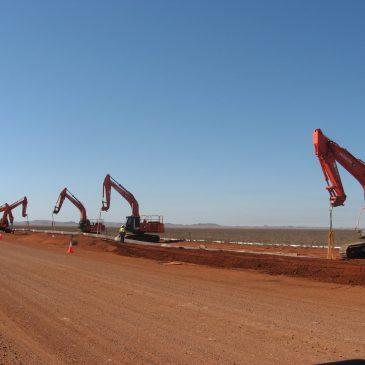
The policy and guideline changes could have significant implications for pipeline owners, operators, and end users within the resources industry. The new policy imposes a more stringent application of decommissioning requirements, with a stated expectation of full removal of pipeline assets at the end of their operational life. Traditionally, it has been common industry practice to abandon pipelines in place, typically by grouting them with inert material to prevent subsidence in the future. Typically, cost modelling has been developed to amortise construction costs over the asset’s lifespan. For many pipelines that have been operational for decades, little to no provision has been made for the excavation, backfilling, and rehabilitation of hundreds of kilometres of pipelines.
While the proposed policy does allow for in-situ abandonment in cases where a compelling argument for lower environmental impact can be made, this is contingent on Ministerial Approval on a case-by-case basis and subject to the approval of a decommissioning plan, submitted prior to construction and regularly updated. Insitu abandonment will only be considered when supported by compelling scientific study and data, itself a significant undertaking.
The uncertainty surrounding this aspect of asset decommissioning may be reflected as a future liability during due diligence reviews, potentially undermining the asset’s value, especially if acquisition discussions are underway.
Consult and communicate how your operations may be impacted.
At MBS Environmental, we encourage all stakeholders to actively participate in the opportunity to provide feedback on the creation of these guidelines and policies before they are finalised and implemented. As committed members of AMEC and APGA, we are ready to engage with our clients and consolidate their input to submit comments to DMIRS.
Feel free to reach out for a discussion or to address any questions you may have. Your input and collaboration are vital during this crucial policy development phase.